Fundacja Ocalenie, along with partner organizations – Sienos Grupė from Lithuania, Gribu palīdzēt bēgļiem (I Want to Help Refugees) from Latvia, and Human Constanta from Belarus – is publishing a report on fatalities at the European Union border with Belarus.
Countries on the eastern border of the European Union have adopted pushback policies against migrants, similar to those known from other European borders: the Mediterranean Sea, the Balkans, etc. However, natural conditions at each of these borders differ, and governments use the landscape as a weapon in various ways.
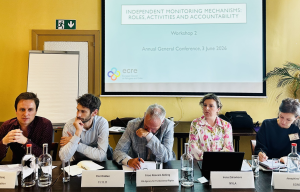
During the panel discussion, together with experts, we will consider the differences and commonalities between migration policy crises at the European Union borders. How does the humanitarian crisis on the eastern European border fit into the overall framework of policies at the external borders of the Union? How are narratives about irregular migration built in individual EU border countries? How does local civil society respond to these crises?
READ THE REPORT
No Safe Passage. Migrants’ deaths at the European Union-Belarusian border
Editorial: Alicja Palęcka
Authors: Enira Bronitskaya, Alena Chekhovich, Aušrinė Gogelytė, Anna E. Griķe, Dalia Krapavickaitė, Alicja Palęcka, Ieva Raubiško
Coordination: Maria Beburia
Special thanks to those who shared their experiences and knowledge: Paulina Bownik, Piotr Czaban (POPH, journalist at Czaban Robi Raban), Aleksandra Gnap (MSF), Lucyna Marciniak, Katarzyna Mazurkiewicz-Bylok (POPH), as well as to translators, lawyers, and border activists who reported and continue to report the testimonies of people on the move.
Collaboration: Fundacja Ocalenie, Human Constanta, Sienos Grupė, Gribu palīdzēt bēgļiem, Marta Szymanderska-Pastryk, Claudia Ciobanu, Watchdog Poland Civic Network, inter-organizational team for monitoring border deaths: Natalia Ciastoń (We Are Monitoring, Grupa Granica), Aleksandra Gulińska (We Are Monitoring, Grupa Granica), Małgorzata Harasimowicz (We Are Monitoring, Grupa Granica), Dr. Natalia Judzińska (Researchers at the Border, Institute of Slavic Studies PAS, Grupa Granica), Alicja Palęcka (Fundacja Ocalenie)
Consultations: Tomasz Pietrzak, Jakub Ławniczak, Médecins Sans Frontières
The project International network of organizations for the creation of a report on fatalities of the humanitarian crisis at the European Union border with Belarus is co-financed by the European Union and the Transatlantic Foundation, in cooperation with The German Marshall Fund of the United States.
Funded by the EU. Expressed views and opinions are those of the author or authors only and do not necessarily reflect those of the European Union or the European Education and Culture Executive Agency (EACEA). Neither the European Union nor EACEA can be held responsible for them.